
(Passed ✓) Mark Carney ENTj - WSS Certification
A Brief Introduction
“...just as there are no atheists in foxholes, there are no libertarians in financial crises.”
Mark Carney - Value(s): Building a Better World For All
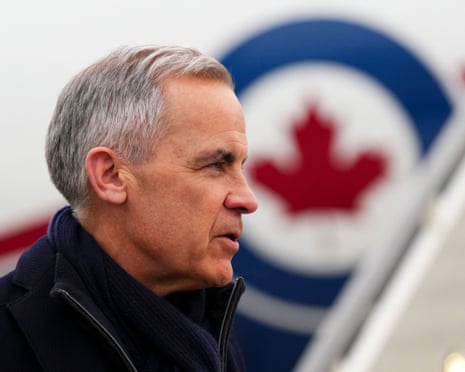
Mark Joseph Carney is the 24th Prime Minister of Canada, and formerly held positions as the Governor of the Bank of England (2013-2020), and Governor of the Bank of Canada (2008-2013). Born in the Northwest Territories in 1965, Mark held an intensely independent streak, first pursuing a career as a hockey player, but eventually pursuing degrees at both Harvard University and Oxford University (with a key focus on economics).
With this knowledge and his own ambition, Mark Carney quickly developed a reputation in various governments e as a respected economist, whose advice was sought from both sides of the Canadian political aisle (Stephen Harper of the Conservative Party and Justin Trudeau of the Liberal Party, who chaired the “Task Force on Economic Growth” after the COVID-19 pandemic). During his current leadership of the Liberal Party of Canada, he is noted by many of his supporters and detractors as being "conservative-leaning" or “centrist,” mainly attributed to his utilization of fiscal policy historically attributed to conservatism, but while being driven by progressive liberalism. This has since drawn both criticism and praise from Canadians, who, whether they support him or not, have voted for Mark Carney to be their leader in Canada’s biggest paradigm shift since the 20th century.
Discerning Mark Carney's Personality
1P & 2T: Bold, Future-Focused Pragmatism
Extroverted Thinking Base + Introverted Intuition Creative
"The PMO is not even settled yet. So, they’re figuring stuff out and how to do stuff, but they are quick on decisions and on recognizing the decisions that need to be made. And so, the corollary on that is that once a decision is made, they expect action to be taken… which could be a challenge."
“He’s too deep into details already,” said the former Liberal staffer, adding they were frequently surprised by some of the material Carney demanded to see.”
Members of the Liberal Party shortly after Mark Carney first took office in 2024. This is notably his first political position, and he is recognized by others to be extremely confident in immersing himself with applicable information. (The National Post)
As stated previously, Mark Carney has developed a reputation amongst political leaders as being intensely focused on information, using data effectively, and improving systems to ensure long-term and practical outcomes. Carney is concerned with what works and rapidly strives to fix things that do not yield practical benefit. Productivity, efficiency, and discerning whether people are meeting these expectations are all skills that Carney brings to the table; it is something he values, and his expertise is something he can offer to the world.
This shows a clear preference for P and a non-preference for E. Notably, I would also indicate that Carney is stubborn in his pragmatism; he believes what works, knows the way forward, and shows a clear confidence in being able to manage crises that stem from economic turbulence. It is also something he is entirely comfortable in engaging with in new environments and has had long-term success in this area consistently. The devaluing of E, however, comes with the tendency to make headlines (sometimes for the wrong reasons) because he sometimes will aggressively correct reporters/interview panellists. Even if it comes at the expense of maintaining a facade to make him more popular with his voters or risking further alienating his detractors.
While Mark Carney does possess a certain degree of skill in making himself appealing to a wider demographic, this only exists in brief contexts, specifically when Carney is there to deliberately appeal to voters (his interviews with Jon Stewart and 22 Minutes being a perfect example). It provides a stark contrast to his typical demeanour, one that conflicts with the steely, dry, and demanding supervisor that many of his MPs describe.
Even when running for office in the 2024 Canadian Federal Election, there are numerous instances in which Carney directly challenges reporters when he feels they are misrepresenting the facts. Even if the interview started out positive with him smiling and even if he tries his best to remain inclusive to the audience, you will begin to see that facade roll back to reveal his truly valued focus on pragmatism > emotion.
“I’ll take that as a 'no' then.”
“No, you’ll take that as a very comprehensive answer to your question.”
Mark Carney to a journalist who questioned why he was travelling abroad as prime minister despite not being officially elected (he originally stepped into office to replace former prime minister Justin Trudeau).
CBC News (March 20, 2025)
“I’m pushing inflation out of your pretext because it’s not factually correct. Sorry, you ask a factual question; you get a factual answer.”
Carney correcting a reporter about the implications of inflation, which he notes are actually within the Bank of Canada’s target range.
Global News (April 26, 2026)
As a result, his communication style (when he is at his most comfortable) is very in-depth, dry, and often seeks to give his audience as much information as possible, which further emphasizes his clear focus on P1. He can, at times, run into a bit of trouble in the political theatre, in which his responses to questions, while detailed, run the risk of becoming overwhelming (and even aggressive) in scope to the average listener. Additionally, he shows a disregard for Laws (L7) and sometimes comes under fire from his fellow Liberal cabinet ministers for his lack of “dedication” towards specific ideologies, such as environmentalism. This has even culminated in several long-standing Liberal MPs leaving his cabinet (such as Stephen Guilbeaut) because of these disagreements. Many NDP and Liberal ministers feel as if Mark Carney has “betrayed” his commitments to pursuing clean energy in favour of capitalistic endeavours. But rather, instead of a betrayal, Carney acknowledges the immediate practicality of resource development and expansion in not only making Canada more independent but also addressing the brewing separatist sentiment in Alberta.
It shows that despite Mark Carney being invested in climate commitments (and aligning himself with much of Western Europe), he is willing to compromise on those commitments insofar as it creates positive progress. Mark Carney has repeated himself at length that he wishes to turn Canada into a “green-energy superpower,” but strives to reach that point through pragmatism, rather than strict/rigid adherence to ideological positions (P1 and L7). His focus on environmentalism comes from a prediction that much of the world’s economy should invest in green energy to avoid long-term economic struggle. Biomes that are affected by significant changes in the climate are already being subjected to skyrocketing insurance costs, and an overall lack of investment because of the economy being forced to plan short-term (which increases risk and economic instability).
Mark Carney, in a speech given at Lloyd's of London, dubbed it “The Tragedy of the Horizon.” It is not an idealistic view of the future; rather, climate-change prevention is a pragmatic investment to avoid a negative future. Additionally, at his now (in)famous speech at Davos, he distinguishes himself from other speakers by citing a fundamental shift in the power structures and stating that “middle powers” must realign themselves to prevent future abuses from the world’s superpowers to end the fiction that international trade rules are applied evenly to everyone (when facts clearly indicate the opposite).
“What does it mean for Middle Powers to live the truth? First it means naming reality. Stop invoking rules-based international order as though it still functions as advertised. Call it what it is. A system of intensifying great power rivalry where the most powerful pursue their interests using economic integration as coercion.”
Mark Carney during his speech at Davos.
Carney’s long-term focus indicates a preference for 1P and 2T. While he is still focused on pragmatism and fact-oriented argumentation and can incorporate various different “fields of expertise” into his arguments (finance, environmentalism, history, etc.), he prioritizes one interpretation of which “direction” events are heading towards and strives to position systems to best capitalize on those future trends. In essence, those possibilities are ones that directly serve his interpretation of the future, which indicates a strong use of intuition but a preference for 2T over 8I.
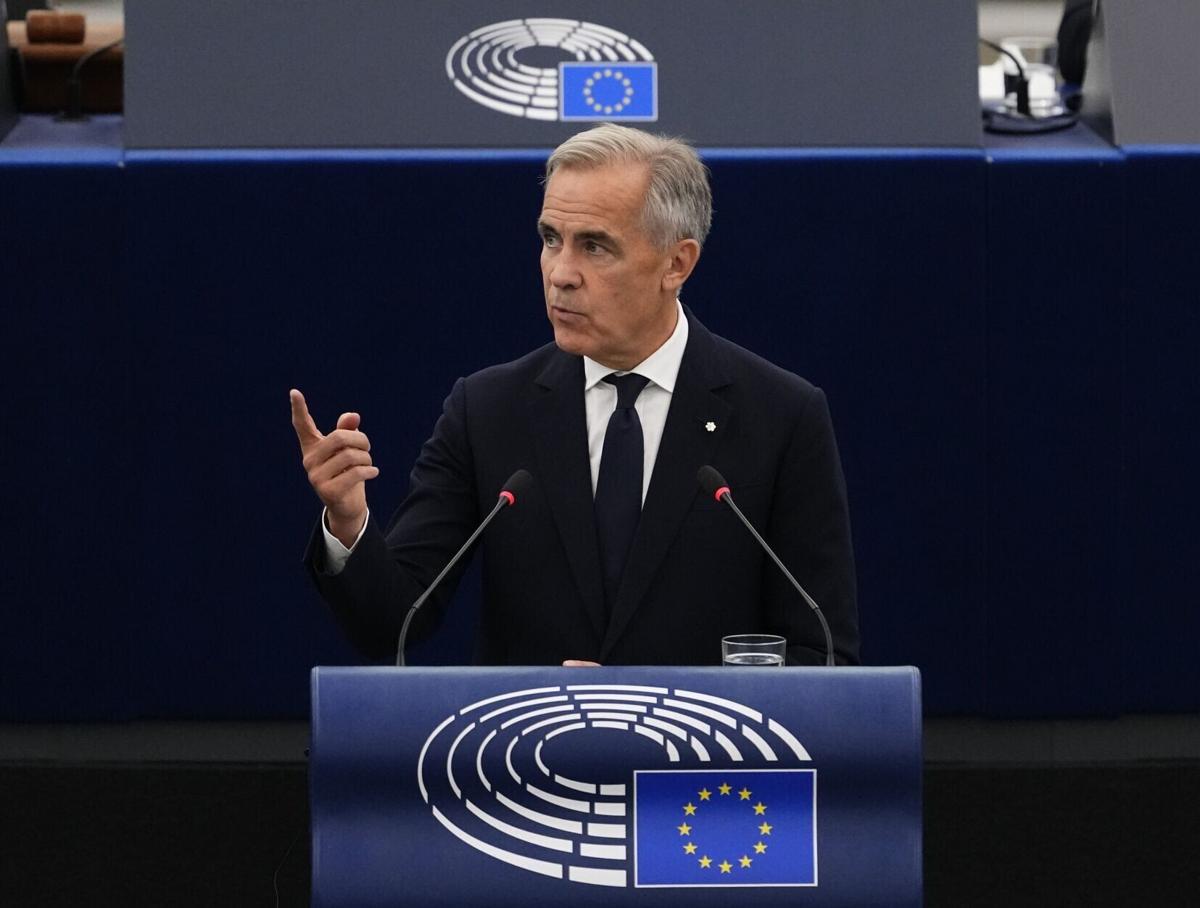
This future-focused orientation then directly ties into Mark Carney’s weaknesses, most notably his “growing pains” as a politician. He has experienced frequent criticism from the "breakneck" pace at which he conducts his workspace. Colleagues highlight that he has a propensity to create unrealistic demands that promote quick progress at the expense of day-to-day comfort and realistic expectations.
This is a direct contrast to the method of his predecessor, Justin Trudeau (an ESE), ran his office.
Productivity is not the only measure in which you should conduct a team, as you run the risk of burning out your employees, endangering your own health, and risking plummeting morale. Temperance is important, and giving your workplace time to relax can help to maintain consistent performance. However, Mark Carney not only ignores this; he actively devalues this notion. If employees cannot keep up with his demands and fast-paced decision-making, they are to be replaced. He runs his political affairs akin to still working in the banking world, with a ruthless need for long-term productivity. This indicates a complete devaluing of S not only for his own rapid work schedule but for others as well (which indicates 4S).
Mark Carney has also been reported to have a heated temper and can lash out at employees (and the press) in ineffective and strange outbursts. While Carney has developed a reputation for not “suffering fools" and has been labelled as a political weakness for Carney ever since he first stepped into the Prime Minister’s office.
In articles by both the Globe and Mail and Macleans, there have been a variety of sources describing Mark Carney as possessing a volatile temper and having a low tolerance for frustration or perceived challenge. It is clear that Carney values utilizing force in an effort to ensure his goals, but his use of force is… awkward and overemphasized. This indicates an overall struggle in the realm of sensation.
Even if members of his team agree with his position, they do not see his application of force (F) as being appropriate. When Carney gets angry, it is often unsuitable for the situation and is often perceived poorly. In times where he gets visibly frustrated with the press, it often backfires on him politically. Unlike more effective utilizations of F, Mark Carney seems to utilize force in a manner that may have been effective in a highly hierarchical and ruthlessly pragmatic workspace but not nearly as effective in political theatre. It indicates a bold preference for F over S; however, it is bold, loud, and oftentimes brash, completely lacking the subtlety and nuance of higher F placements. This suggests that 6F is the most likely placement.
“Three MPs described the exchange as the prime minister losing it on Mr. Battiste, ripping a strip off him, or dressing him down. However, that last description was delivered with an asterisk: other Liberals in the room, they said, sided with the Prime Minister in substance, if not his tone.
“Carney is said to be demanding and short-tempered with those who brief him, creating a much tenser atmosphere than existed under Trudeau, who ran the office like an encouraging teacher. On May 26, the day of his first speech in the House of Commons, Industry Minister Mélanie Joly, whose support was crucial to Carney’s leadership victory, approached him to speak in the House of Commons while he was going over notes. A video shows him casually waving her off, dismissing her as an irritant without even raising his head.”
This tendency has been caught on camera a few times as well, leading to particularly embarrassing and somewhat “goofy” remarks such as “Look inside yourself, Rosemary” when questioned by CBC reporter Rosemary Barton about his conflicts of interest, which has since led to ridicule from other media outlets (such as Rebel Media remarking that Carney was channelling his inner “Hannibal Lecter”).
This leads this paper to his last information element: relations (R). Carney’s focus on running a highly productive and efficient workplace means that he can oftentimes struggle with maintaining sentimental loyalties. Having to manage a slim Liberal majority, where maintaining loyalties with your Liberal MPs is crucial to maintaining political stability, Carney has received criticism for prioritizing the “wrong” supporters or not creating a strong “palace guard” that would remain by his side through political turbulence. Namely, he did not “reward” his supporters for their support through the 2024 election cycle and instead still relegates them to his harsh and rapid work schedule, even casually waving off one of his most hardened supporters, Melanie Jolie, as an irritant.
He has also clashed with Conservative ally (and premier of Ontario) Doug Ford on numerous occasions, most notably when Ford aired an anti-tariff ad that conflicted with Carney’s priorities or when Carney signed an electric car deal with China (which Ford felt was an “insult” to the Ontario automotive industry and expressed frustration with not being consulted beforehand). Doug Ford, a controversial figure in Canadian politics, has been a strong ally to Mark Carney during the 2024 election and has advocated for the Liberal prime minister in direct opposition to the Conservatives. Not doing the bare minimum in consulting Doug Ford before this deal shows a general disregard (or obliviousness) towards this relationship.
Additionally, he also decided to keep on staunch environmentalists or pro-Trudeau cabinet members, such as Steven Guilbeaut, in his cabinet when first becoming prime minister, despite it being obvious that Guilbeaut would not remain loyal to his cabinet for long.
He justifies this tactic as being immediately practical, as it retains knowledge and expertise in the midst of a cabinet transition. But even with this justification, this tactic presents risks. Especially when Carney immediately began work to dismantle “green policies” such as the carbon tax, an invention created by Guilbeaut and Trudeau. While it might be too early in Carney’s prime minister career to tell, this might be a key weakness once the “honeymoon” phase in the Canadian political sphere fades. If he loses popularity in the Canadian population, he may not have a loyal support structure that will support his ambitious endeavours.
Despite this weakness, however, Mark Carney does clearly value his closest personal relationships and deeply respects long-term loyalty. Even to the point of showing outright favouritism at times to those particularly close to him. A key example of this tendency is his relationship with Chrystia Freeland, a politician who named Mark Carney the “godfather” to her child and a close family friend for decades, who was offered the job as the Minister of Transport and Internal Trade by Mark Carney, despite being rivals in the Liberal leadership election in 2024, and despite Chrystia's role in the collapse of the previous Trudeau government.
In his personal life, he has also been married to his wife, Diana Fox Carney, for thirty years after they met playing hockey together in college, and has a very positive relationship with his four children. These relationships are notably private, low-key, and something that Mark keeps to himself. While his political relationships can experience turmoil, his family life and his closest relationships remain stable, cherished, and consistent.
Because of these factors, it is more conclusive to suggest that Mark Carney’s most likely R placement is 5R. While Mark Carney can be harsh and demands everyone adhere to his demanding work schedule and expectations, he highly values people who demonstrate long-term loyalty to him, does his best to maintain positive relationships with those individuals (such as Chrystia Freeland), and in rare instances, even awards them with positions of power and influence once they demonstrate both loyalty and effectiveness. This differs from other R placements, such as the 4R of the ILE, who inherently devalue favouritism and strive to treat everyone equally in accordance with a principle/worldview (L), and gauge ideas/possibilities by the potential of them themselves (1I).

“Without your support, I wouldn't be standing here," he said. "Without your examples, I wouldn't have a purpose. Without your love, I wouldn't have the strength that I need for what lies ahead.”
Mark Carney about his wife and children
Therefore, it is my conclusion that Canadian Prime Minister Mark Carney is an LIE (ENTj).
An individual that prioritizes pragmatism (1P) that capitalizes on perceived future trends (2T), and values his own ability to navigate himself and others to beneficial outcomes. To do this, he is able to tie in various different areas of expertise (8I), but then takes those ideas to narrow them down into a single conclusion to act on. While Carney understands structures and belief systems, he is willing to compromise on those systems in favour of practicality if it means moving things forward and cutting through "red tape” (7L). This can sometimes put him at odds with more ideologically minded individuals in parliament.
If he needs to, he can also come across as charming (3E), but otherwise prefers to deliver information in a blunt manner that gives his audience the largest amount of information possible. As a result, outside of specific controlled contexts, Carney’s image is largely one that can be excessively dry and impersonal and seeks to give out facts above all else, in stark contrast to his predecessor, Justin Trudeau.
At the same time, he is also someone who, while being excessively pragmatic, can at times struggle with maintaining loyalties/discerning who is trustworthy long-term (5R), being overly aggressive (6F), and focusing on (at times) ruthless productivity at the expense of day-to-day comforts/positive sensations, attempting to execute ambitious deadlines, which runs the risk of burning himself and his team out (4S).
Bibliography
“A Trip to Tim Hortons with Prime Minister Mark Carney.” 22 Minutes. https://www.youtube.com/watch?v=49-XqrqG4vo.
As Carney Faces Pressure to Deliver, Some MPs Question his Leadership Style. Globe and Mail https://www.theglobeandmail.com/politics/article-as-carney-faces-pressure-to-deliver-some-liberal-mps-question-his/
“Ask a Factual Question, Get a Factual Answer.” Global News (2026). https://globalnews.ca/video/11818732/ask-a-factual-question-get-a-factual-answer-carney-skewers-reporter-in-tense-exchange.
Breaking the Tragedy of the Horizon - Climate Change and Financial Stability - Speech by Mark Carney. Bank of England (2015). https://www.bankofengland.co.uk/speech/2015/breaking-the-tragedy-of-the-horizon-climate-change-and-financial-stability.
Carney: “I’m Complying with all the Rules.” CBC News (2025). https://www.youtube.com/shorts/P8uH7_gef4A
Carney, Mark. “Value(s): Building a Better World for All.” William Collins. 2021.
Doug Ford Calls for Chinese EV Boycott in Canada After Carney Deal. CBC News (2026). https://www.cbc.ca/news/canada/toronto/doug-ford-chinese-electric-vehicles-carney-9.7054922.
In Mark Carney’s PMO, Punctuality Matters and Patience is in Short Supply. National Post. https://nationalpost.com/news/politics/inside-mark-carneys-pmo-where-punctuality-matters?utm_source=twitter&utm_medium=organic&utm_campaign=NP_social&utm_content=news
Guilbeaut Quits Carney’s Cabinet Over Energy Deal with Alberta. CBC News (2026). https://www.cbc.ca/news/politics/guilbeault-quitting-cabinet-9.6995299
“Mark Carney - Canada Not Interested in Trump’s Offer & Liberal Leadership Prospects.” The Daily Show (2024). https://www.youtube.com/watch?v=zs8St-fF0kE
Maher, Stephen. “Mark Carney is a Very Demanding Boss.” Macleans (2025). https://macleans.ca/politics/mark-carney-prime-minister-of-canada/
“Middle Powers Must Act Together, Because If We Are Not at the Table, We’re on the Menu: Carney” Bloomberg News (2026). https://www.youtube.com/watch?v=k6U3bhtBE-Y.
"No, You’ll Take That as a Very Comprehensive Answer to Your Question | PM Responds to Reporters.” CTV News (2024).
https://youtu.be/O_YJntMUeFE?si=MUYMwRUuUGcVuqSo
“PM Mark Carney Risks Trouble Without Loyal “Palace Guard” Say Political Players.” Hill Times (2025). https://www.hilltimes.com/2025/10/13/pm-carney-risks-trouble-without-loyal-palace-guard-say-political-players/476835/
“Was Mark Carney Channeling his Inner Hannibal Lecter?” Rebel News (2025). https://www.youtube.com/watch?v=nrNIVd1oBqg
2 comments
Log in to join the conversation.
Bro regardless of what system you're using, you're genuinely creating bangers, so much effort put in this, good job my man.
Thanks broski